



 HOME
Latest News.


The saddest day in Jewish history
This Year9. Augi.e., HebrewTisa Beav, according to the Jewish calendar, “falls” on Thursday, July 23, 2026.
Why and for what reason do we remember and commemorate that particular day –9. AugI mean, I figured.Tisa Beav!?!
It is almost unbelievable with what regularity and frequency, in the truly long, over 4,000-year written history of the Jewish people, important and significant events occurred on that day.– Unhappy.circumstances and events for our people. And that is why this day, the 9th of Av (HebrewQuieter moo) is considered in Jewish tradition to be the saddest day in history and the day when the greatest national tragedies occurred.
And this astonishingly date-consistent and unfortunate “series” began as far back as 26 centuries ago, with the Babylonian conquest of Jerusalem and the devastation and destructionThe First Jewish Temple, the so-called Temple of Solomon (King Solomon)In Jerusalem.– as the holiest site of the Jewish faith, a place of pilgrimage, and ultimately, both then and now, the capital – back then of the Kingdom of Israel, and today of Medinat Yisrael – the State of Israel.
– On that 9th of Av,In 586before the Common Era,The Babylonians destroyed Jerusalem and the Temple There’s a certain something… about them.and deported the Jews into Babylonian captivity. That was also when one of the most emotionally charged texts in the Bible came into being –Psalm 137(in the Orthodox Psalter, this is Psalm 136). This psalm, also known asBy the rivers of Babylon, describes the sorrow and longing of the Jews who were exiled to Babylon after the destruction of Jerusalem and the Temple.
And the verses of the psalm say:IF I FORGET YOU, O JERUSALEM,
MAY MY RIGHT HAND WITHER,
LET MY TONGUE STICK TO THE ROOF OF MY MOUTH,
IF YOU, O JERUSALEM, ARE NOT THE HIGHEST OF ALL MY LONGINGS, DESIRES, AND JOYS…These verses represent a profound vow of loyalty and love on the part of the Jews towards their spiritual and cultural center, where placing Jerusalem “above all joy” is taken as the ultimate proof of devotion.
But let us return to this date and the series of tragic events in the history of the Jewish people that occurred precisely on that day – the 9th of Av.
– On that day70 ADoccursthe destruction and the Second Temple. Namely, in that year, after defeating the Jews of Judea, the Romans first plundered and then set fire to and destroyed the Second Temple, thus initiating the long-standing persecution of the Jews.
– 65 years later, on that very dayThe fortress of Betar falls (135 AD).Beitar was an ancient Jewish settlement and the last strong stronghold of the insurgents during the Bar Kokhba revolt (132–135) against the Roman Empire. It was located in the Judean Mountains, southwest of present-day Jerusalem. After three years of the uprising for the liberation of Judea in 135, the Romans nevertheless managed to suppress the uprising and, on that very day, to capture the fortress of Bethar. On that occasion, the Romans massacred hundreds of thousandspeople, and Jerusalem was razed to the ground, and then rebuilt as a pagan city under the name of Aelia Capitolina.
– On that day – August 9 – it beganThe First Crusade (1096). The Roman Catholic Pope Urban II declared this war, which led to the massacres of Jewish communities across Europe (especially in Germany) as the Crusaders passed through on their way to the Holy Land. Interestingly, during the Crusaders’ passage through Belgrade in the First Crusade in 1096, there were no organized massacres of the Jewish population in Belgrade. Although the Crusaders perpetrated horrific pogroms against the Jews inWestern Europe, in Belgrade, their attacks and looting primarily consisted of stealing food and burning houses and parts of the city, as they passed through as an army in transit. And when the Crusaders captured Jerusalem in 1099, specifically on July 15, 1099, following a successful siege that had been ongoing since June, they carried out a massacre, killing approximately 6,000 Jews in Jerusalem. After the Crusaders entered the city, many Jewsretreated and sought refuge in their main synagogue, but they were locked inside and burned there. A smaller number of survivors were captured and later ransomed (such as the group ransomed by the Jewish community of Ashkelon).
– On that day – 9th of Av –In 1290It has started.The expulsion of Jews from England.King Edward I issued a decree expelling all Jews from the country. The ban on Jews living in England lasted for the next 370 years, until the second half of the 17th century – that is, until 1656.
– On that day – the 9th of Av –In 1492There was a…Expulsion of the Jews from Spain. Namely, the Spanish King Ferdinand and Queen Isabella issued the so-called Edict of Alhambra at that time, and the deadline for the final departure from the country expired on this very day.
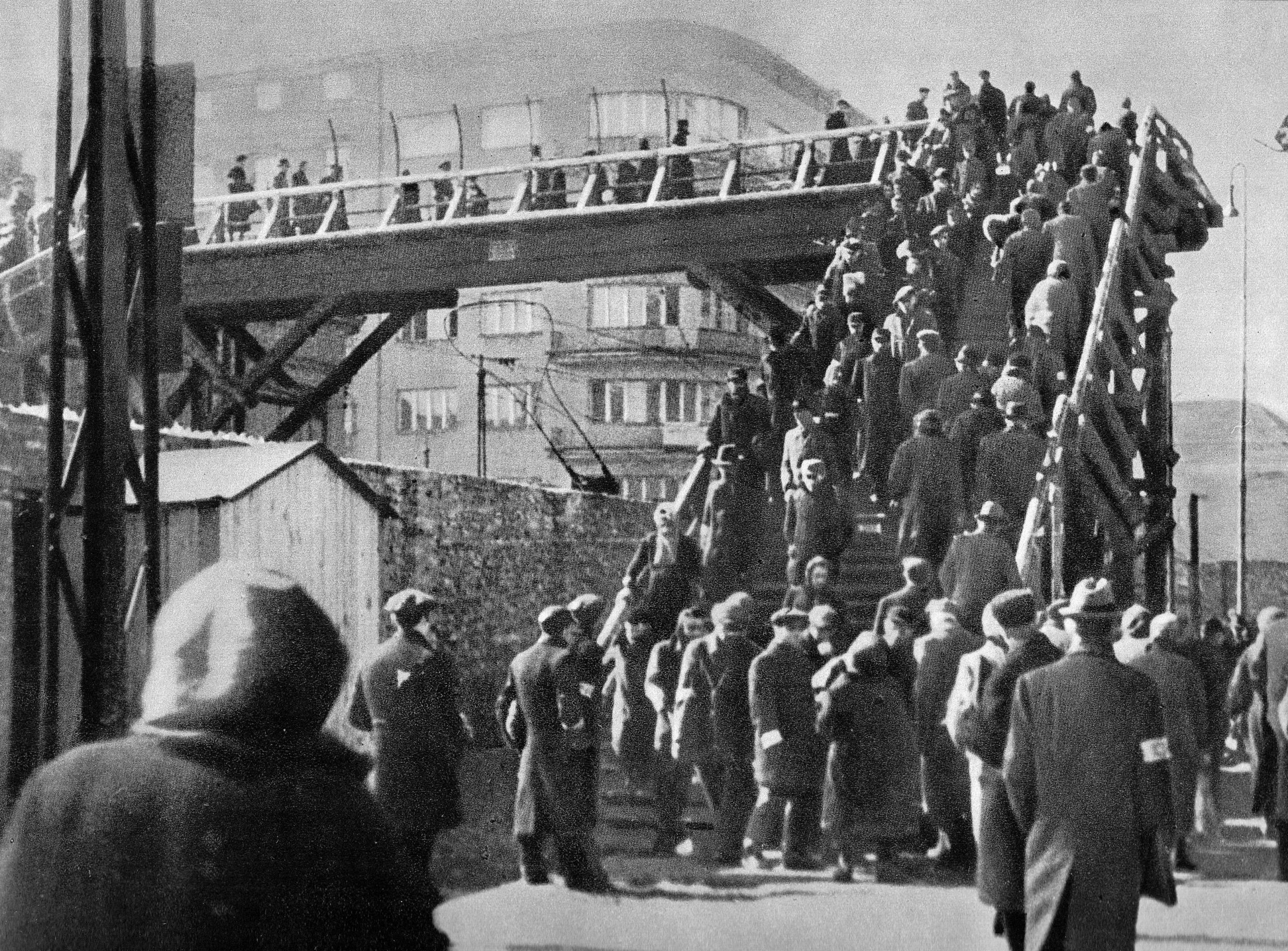
– On that day – 9th of Av –1942During the Holocaust in World War II, massDeportation of Jews from the Warsaw Ghettoin Poland. Approximately 300,000 of them were taken to the Treblinka extermination camp, from which almost no one returned. The remaining survivors, numbering around 49,000, decided after several months to take the desperate step of rising up against the Germans. However, after a month-long, unequal struggle, 7,000 insurgents were killed, and the remaining 42,000 were deported to various death camps. After brutally suppressing the uprising, the Germans then demolished the Great Synagogue inWarsaw, along with the entire ghetto, was razed to the ground.
 Today, Tisha B’Av is observed through rigorous fasting and an atmosphere of deep mourning that recalls the days of mourning for loved ones. In addition to the strict prohibitions that last a full 25 hours (no eating, drinking, leather shoes, or bathing), the observance in practice looks like this:
– The lights are dimmed, the curtain from the Torah ark (parokhet) is removed, and the worshippers sit on the floor or on low chairs.
– The biblical Book of Lamentations (Eicha) and special lamentation songs (kinot) are recited aloud.
– People do not shake hands or greet each other on the street, and work and business are postponed until the afternoon to maintain a focus on mourning.
The day of fasting itself is preceded by a three-week period (which begins with fasting on 17 Tamuz), during which Orthodox Jews gradually introduce restrictions, such as: No weddings, celebrations, or public events with music are held / Men do not cut their hair or shave during these days as a sign of mourning / During the last 9 days from the beginning of the month of Av, the consumption of meat and wine ceases (except for Shabbat), and no new clothes are purchased / forOn Tisha B’Av, a special meal is prepared to be eaten before the fast begins (Seudat Mafseket).
Text: Aron Albahari, photo source: Wikimedia